
Our History
“Stories are wondrous things,” says the writer Thomas King, “And they are dangerous, for once a story is told, it cannot be called back. Once told, it is loose in the world. So you have to be careful with the stories you tell. And you have to watch out for the stories you are told.”
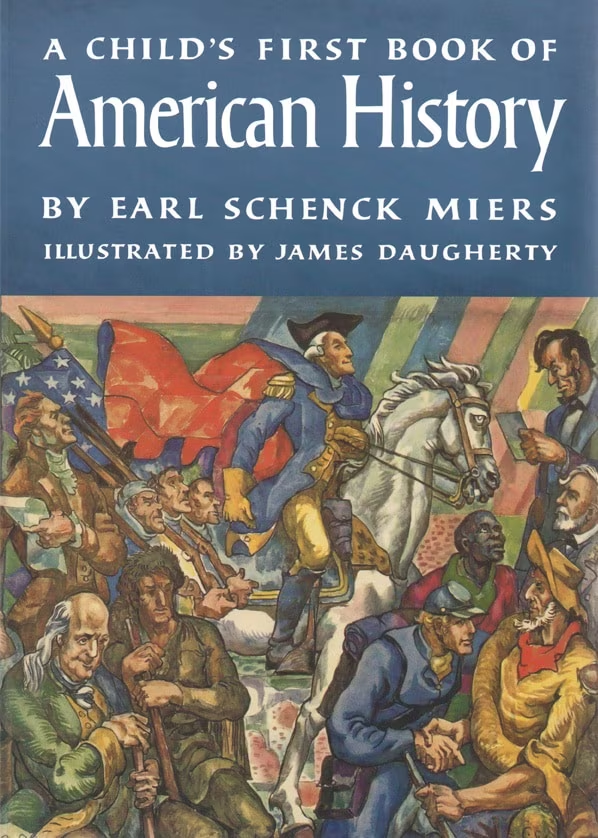
Another mass killing of innocent people in America has been perpetrated with an appeal to history. Touting an idea called ‘Replacement Theory,” right-wing political pundits, politicians, and now, again, domestic terrorists have loosed the poisonous story of white nationalism to violently project who they say “we really are as a nation.” No longer limited to the lunatic fringe of racial supremacists, unfiltered white nationalism has found a home in the comfortable lap of the GOP and mainstream conservative media. As we suggest in today’s episode, such extremist claims are different only by degree from the long-standing white nationalist, standard mainstream history of the nation. And if we don’t immediately recognize that, it is only because the stories we usually tell ourselves, have been carefully formatted as designer memories, safely romanticized for the mainstream understanding of who “we really are as a nation.” No matter how familiar those designer memories may seem, a closer look often reveals them to be born of a checkered past, with stories tailored and curated to serve the needs of certain narrow interests. These designer memories usually involve some variation on the ‘us versus them’ story emplotment, a bewildering narrative binary that makes more palatable the nation’s long history of violence, war, and domestic terrorism.
In other nations as well, that same appeal to an imagined historical exclusivity and ‘us versus them’ storyline, has engendered similar pathologies of violence.
The national stories we tell ourselves, it would seem, are killing us.
Click to hear Designer Memory
Sources Referenced and Items of Interest
Nicholas Confessore and Karen Yourish, “A Fringe Conspiracy Theory, Fostered Online, Is Refashioned by the G.O.P.,” The New York Times (May 5, 2022)
Robin Wall Kimmerer, Braiding Sweetgrass: Indigenous wisdom, Scientific knowledge, and the Teachings of Plants (2015)
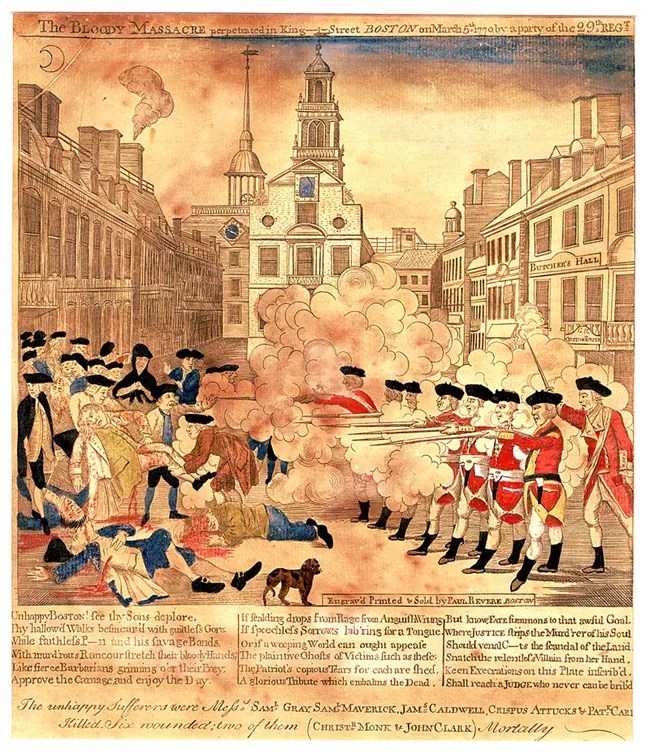
Journal of the American Revolution, review of Serena Zabin, The Boston Massacre: A Family History (2020)
Mitch Kachin, First Martyr of Liberty: Crispus Attucks in American Memory (2017)
Henry Wadsworth Longfellow, Paul Revere’s Ride (1860)
Want to contact us?
Email us: Historyagainstthegrain@gmail.com
https://www.instagram.com/histatg
“Even though no one’s thinking about a revolution in 1770, it’s really only a couple of years before people take [the Boston Massacre] and remake it so that it becomes part of the story.”
Serena Zabin
 History Against the Grain